Umber&Hollow
Umber and Hollow Studios presents

Waiting

A small girl, a dark street, and someone at the top of it who has been waiting a long time. Made in four days by one director and a studio of AI agents.

Epic AI MegaJam 2026Theme: Director's Cut Glass Box dev logUnreal Engine 5.8 · macOS

The game

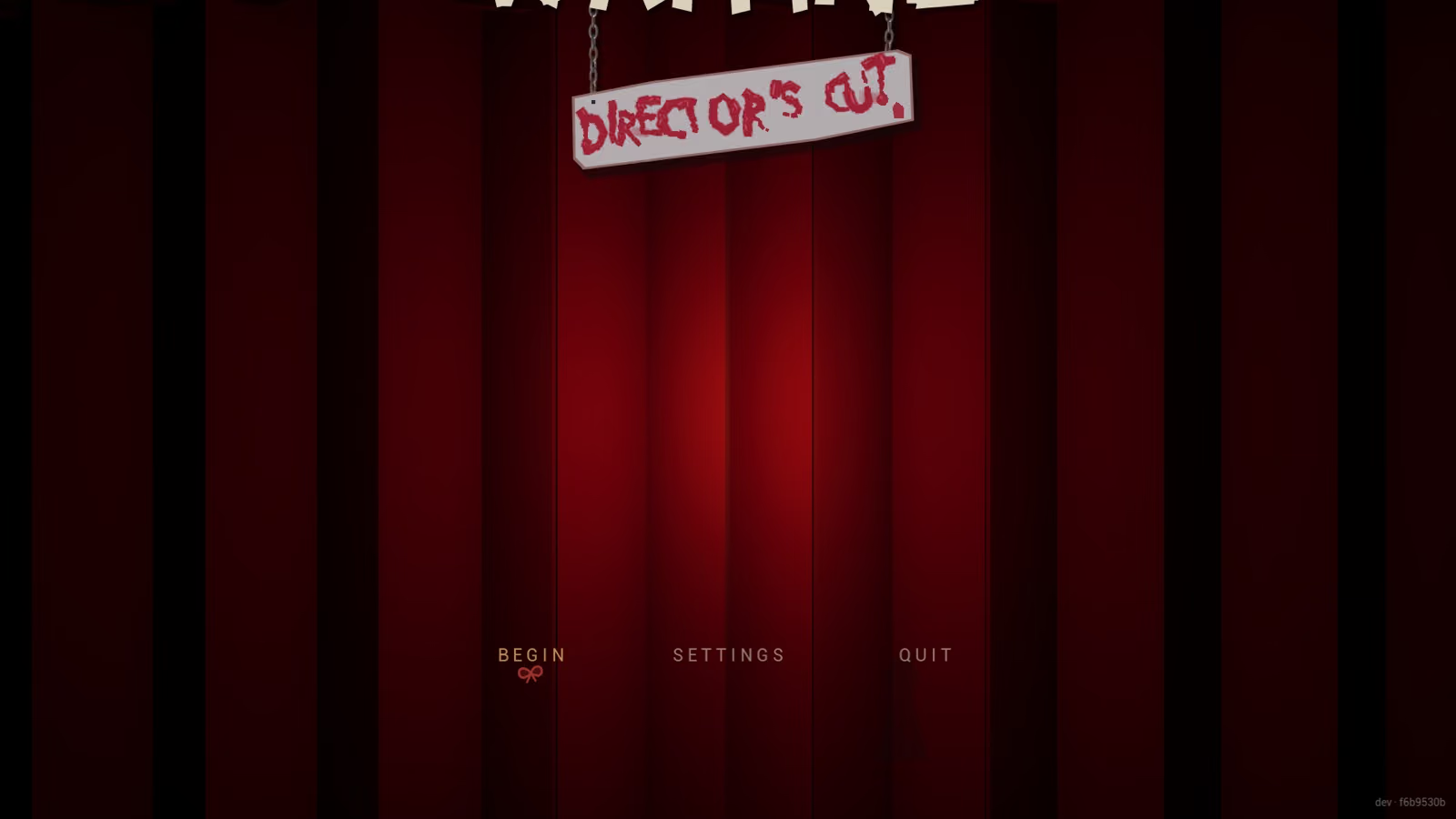
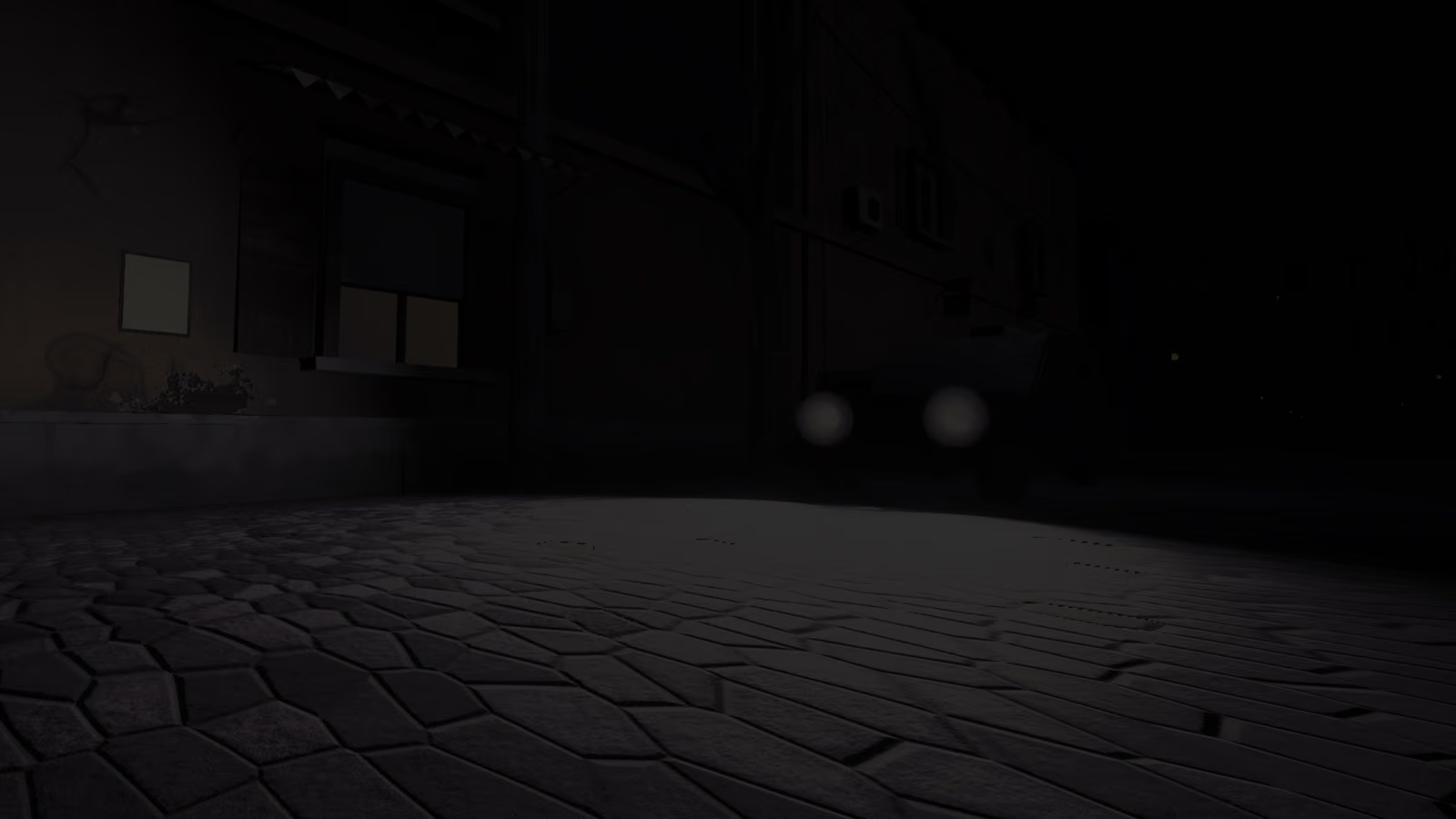
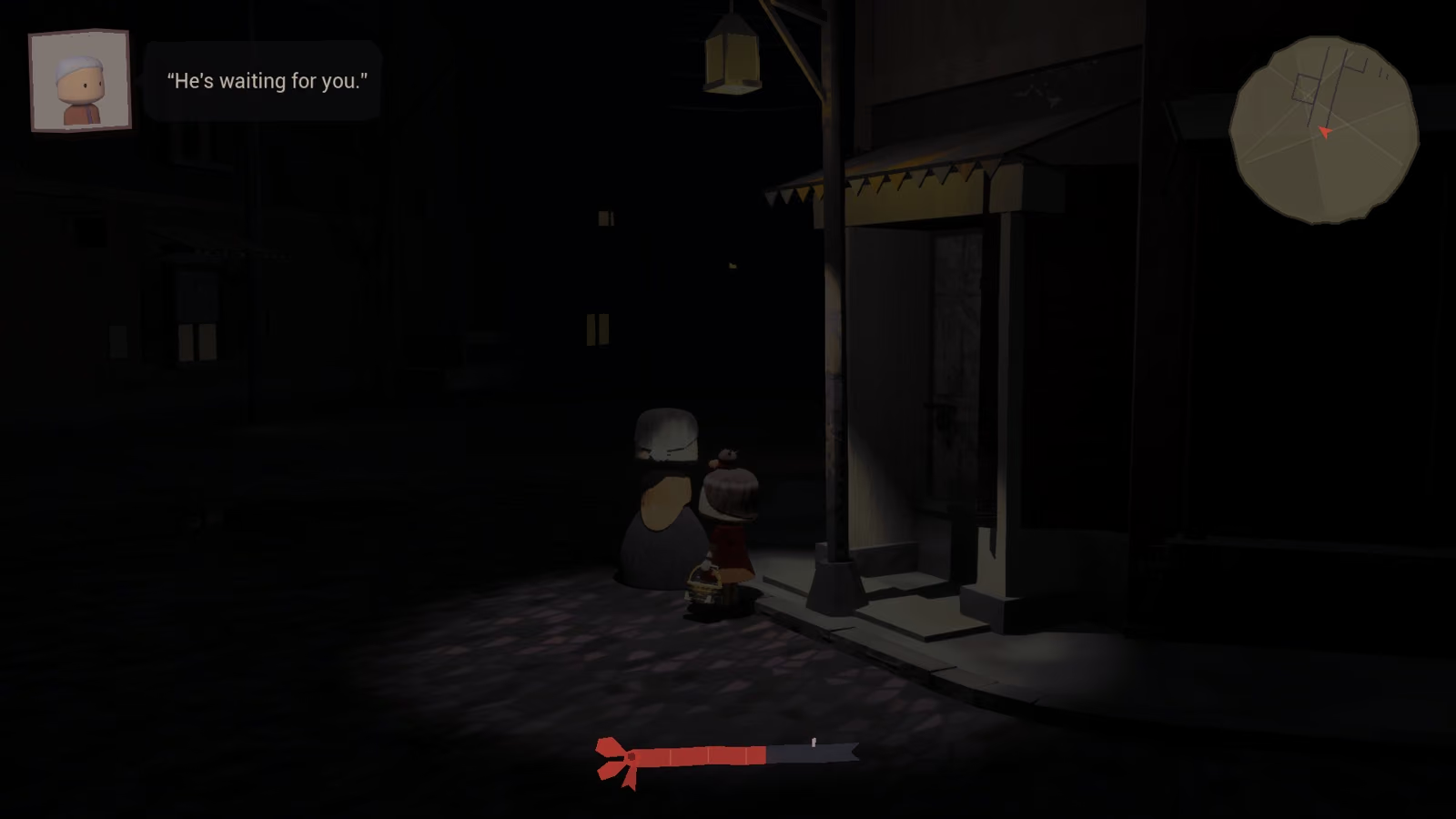
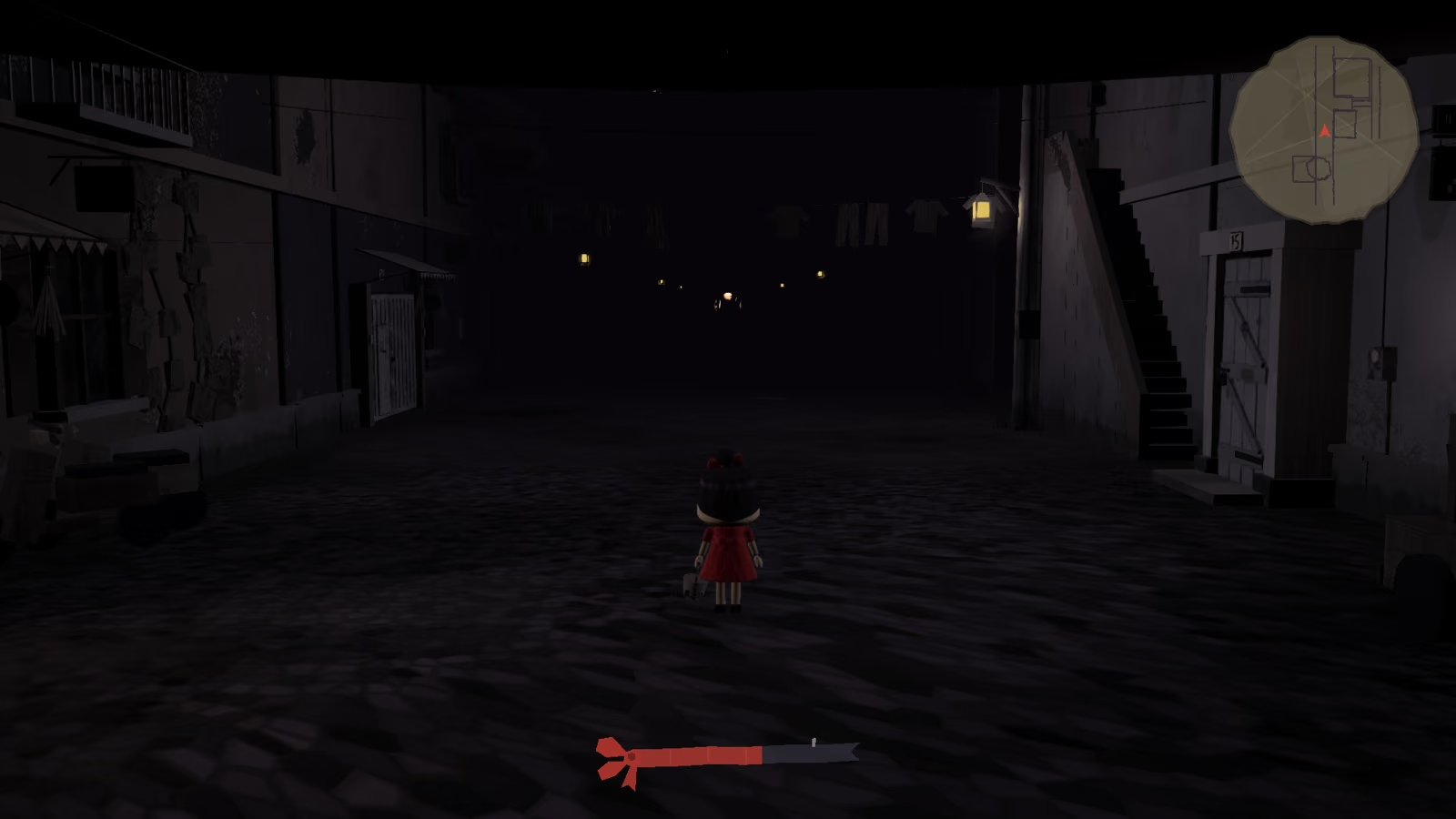
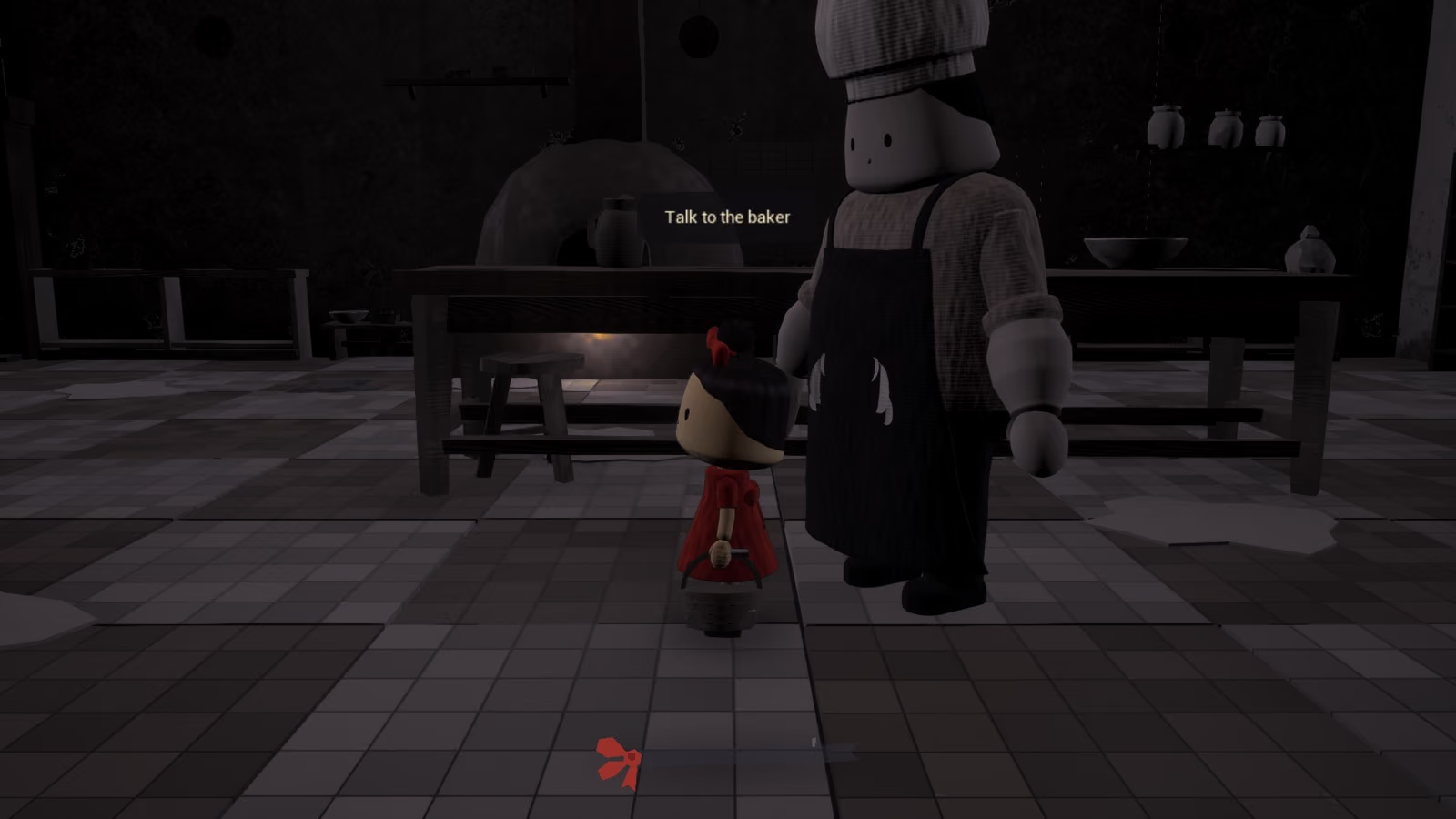
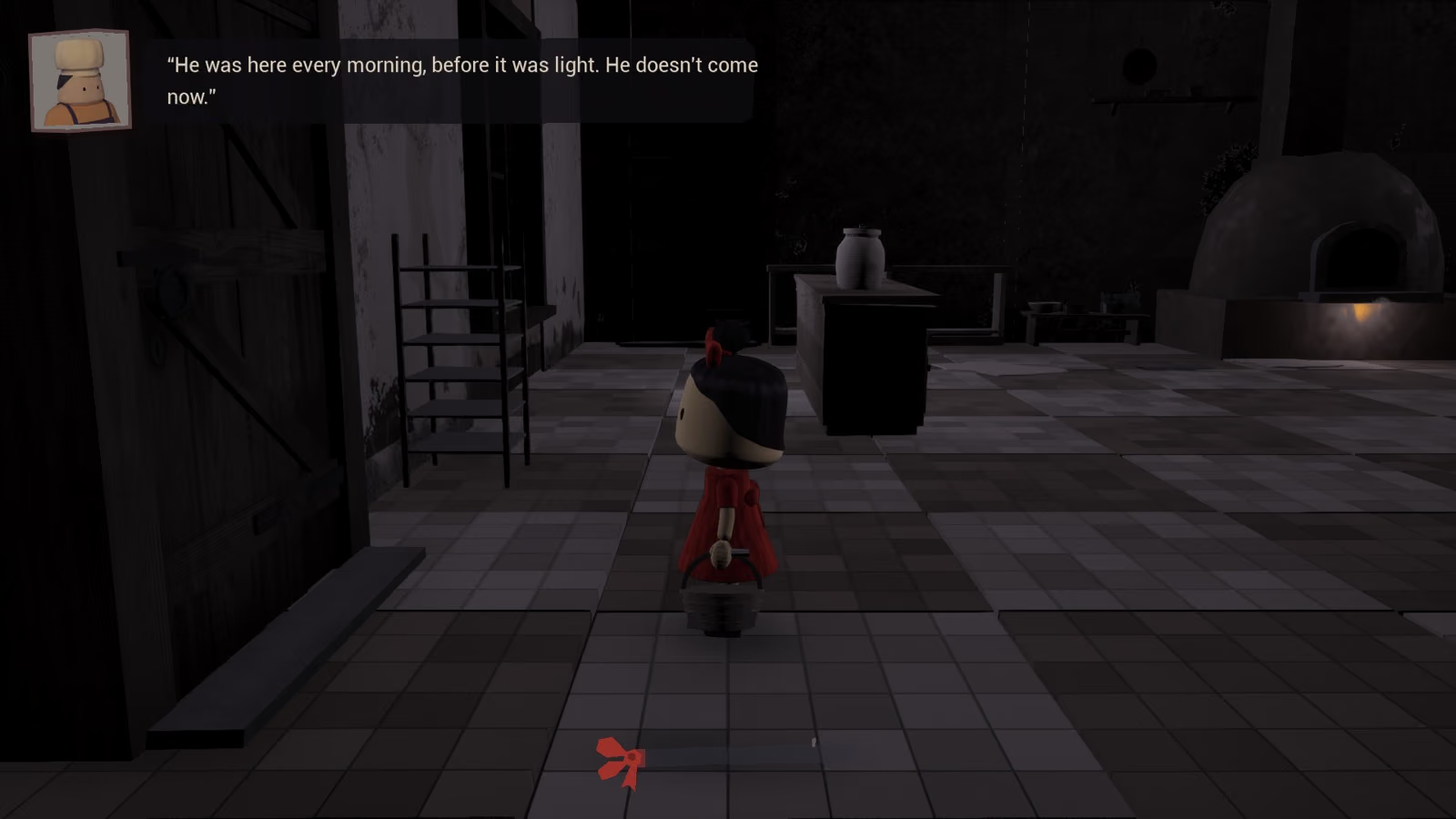
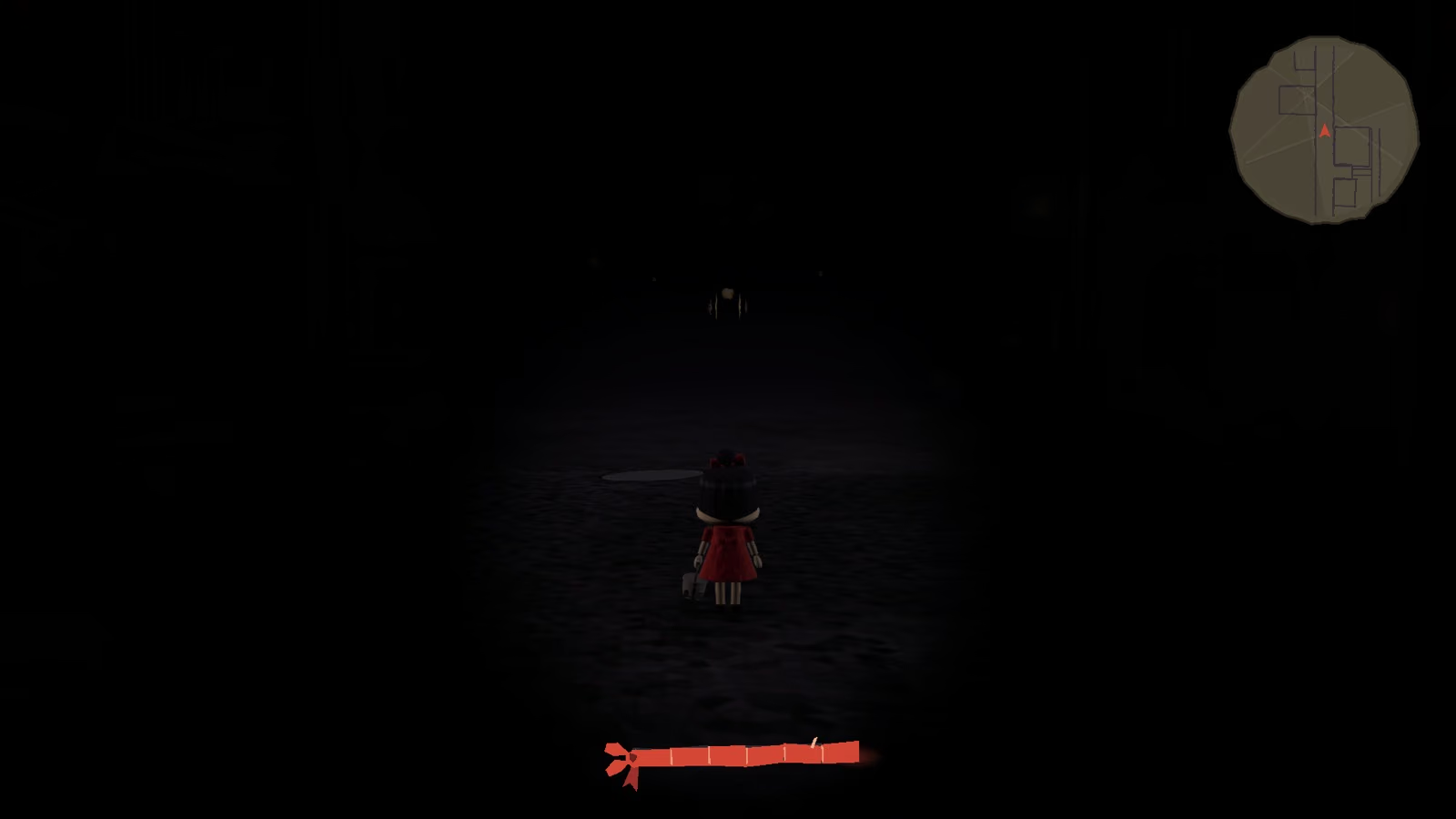
The curtains part, a car roars past and is gone, and a small girl in a red dress is left on a corner at the bottom of a dark street. An old woman puts a basket in her hands and says only: "He's waiting for you." Every house on the way up has someone in it who needs something. Her fear climbs the further she goes; grown-ups and doorways calm it. Her heartbeat tells you how close she is to screaming.

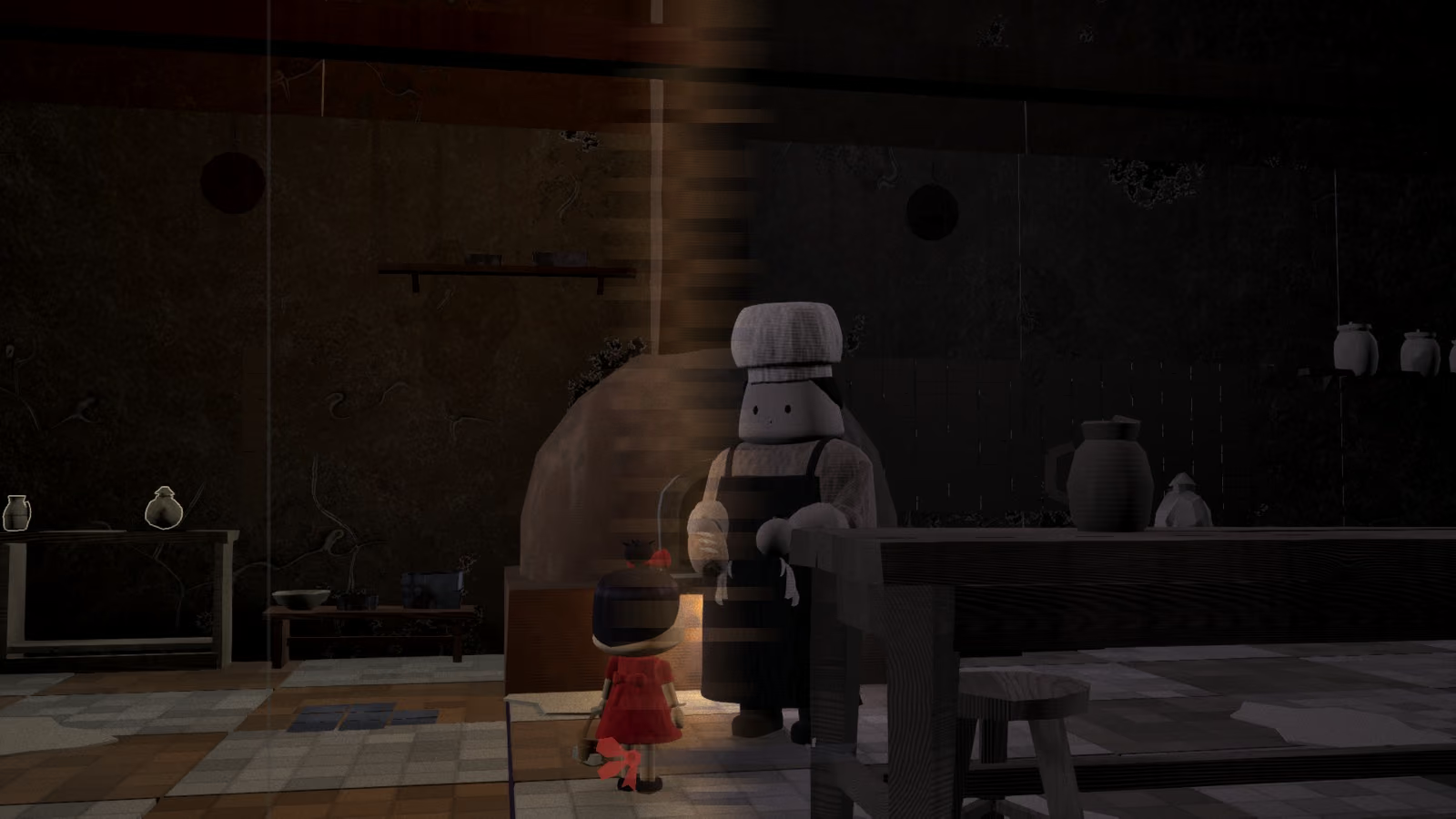
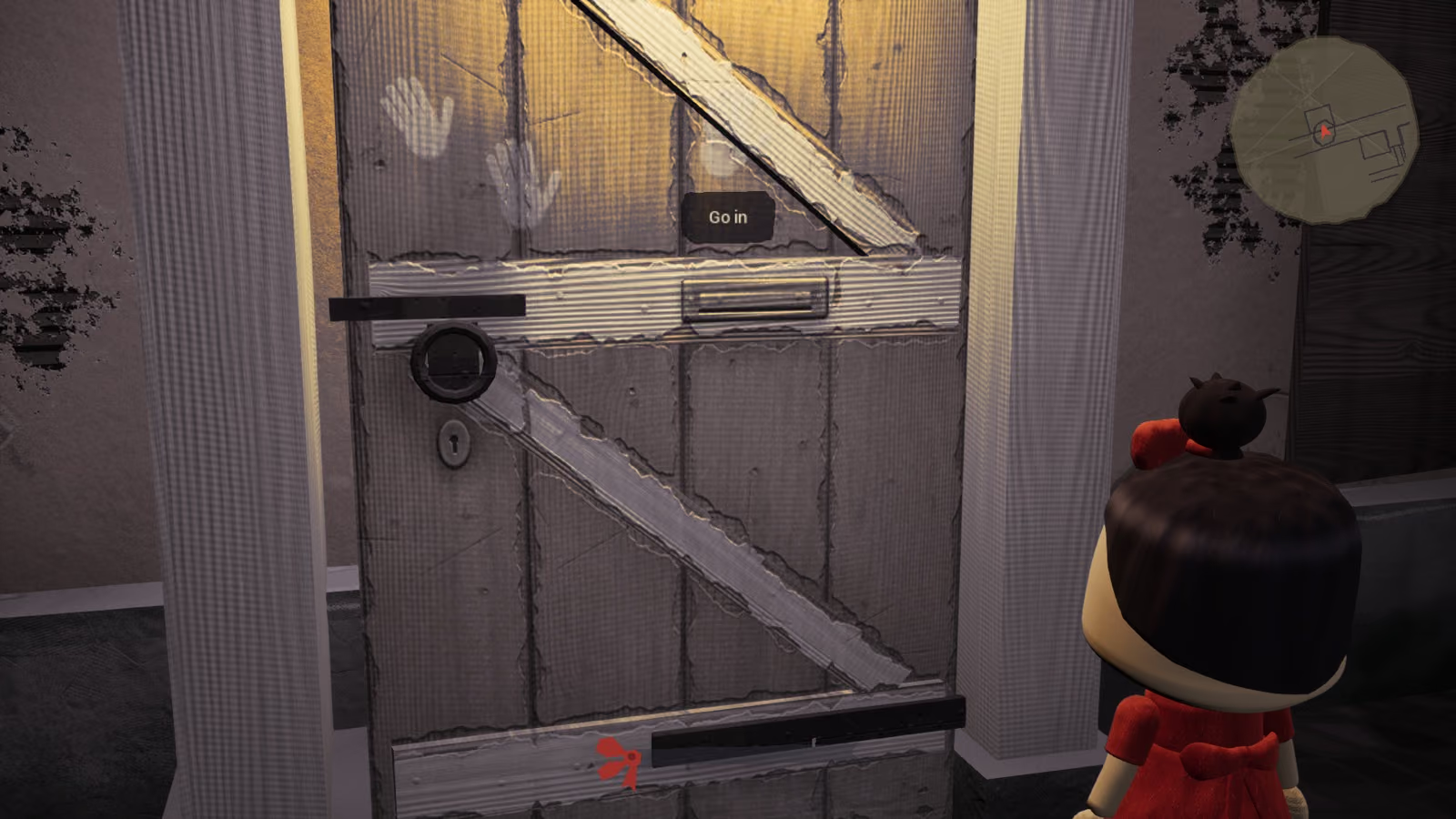
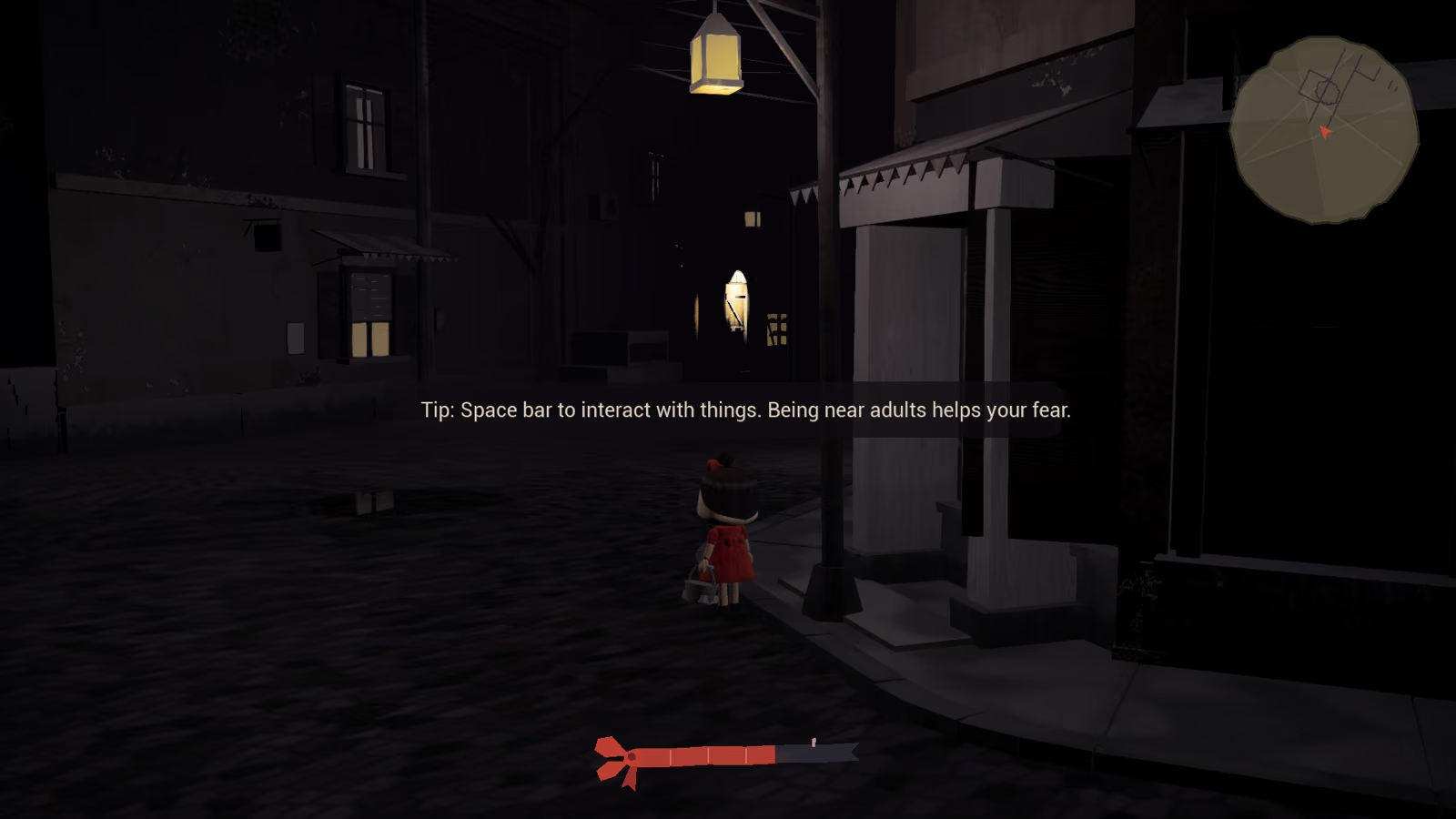
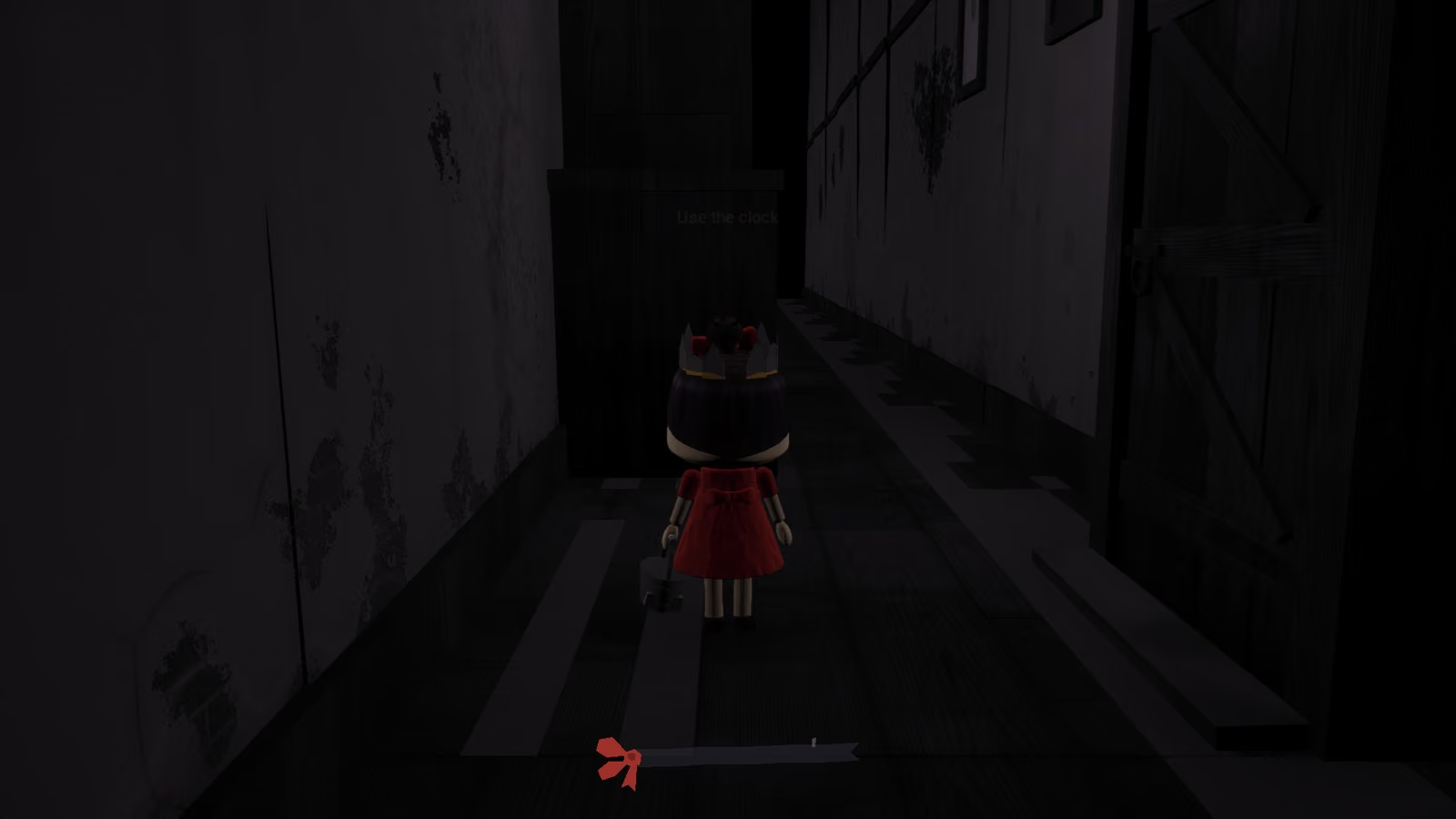
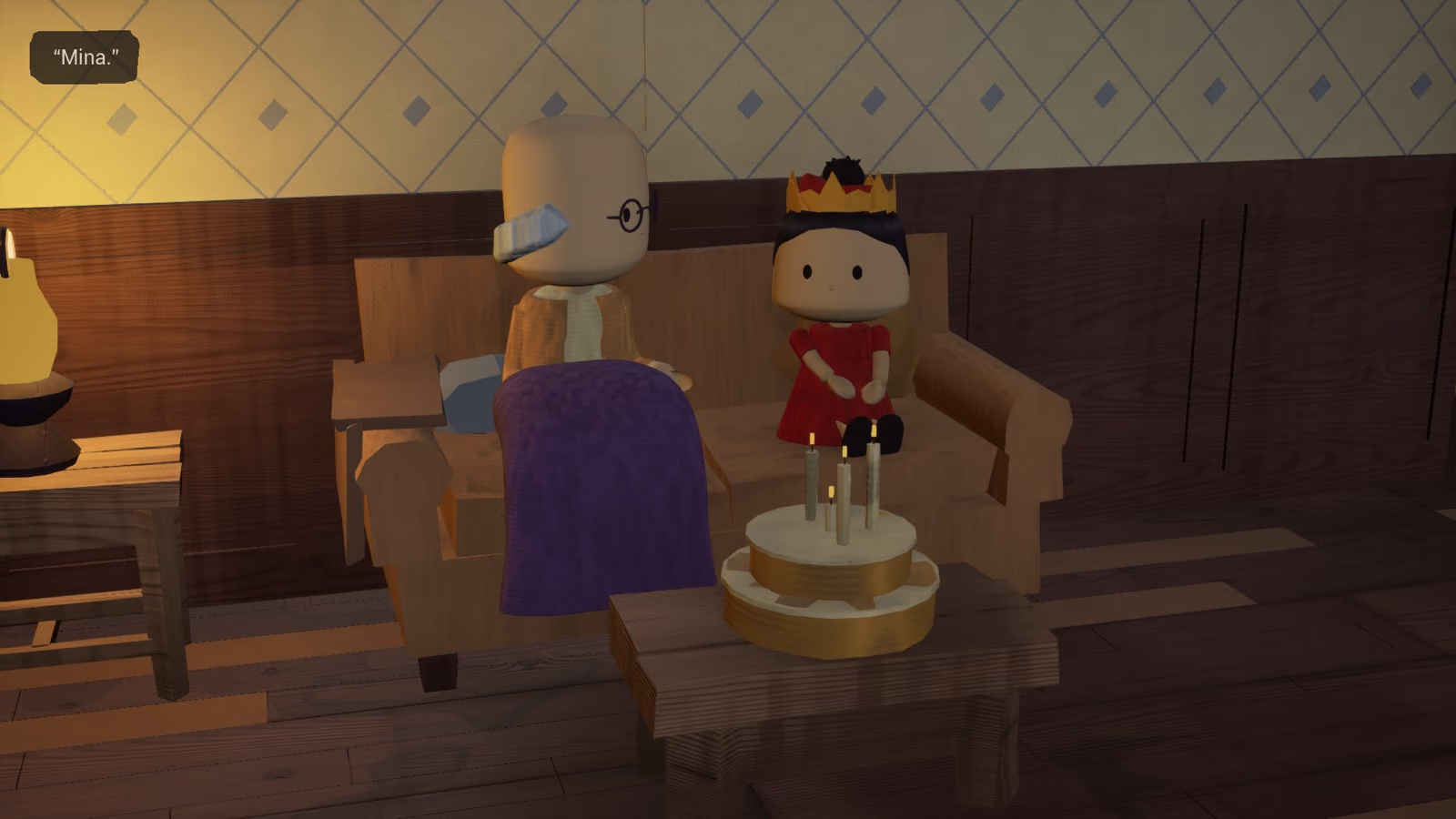
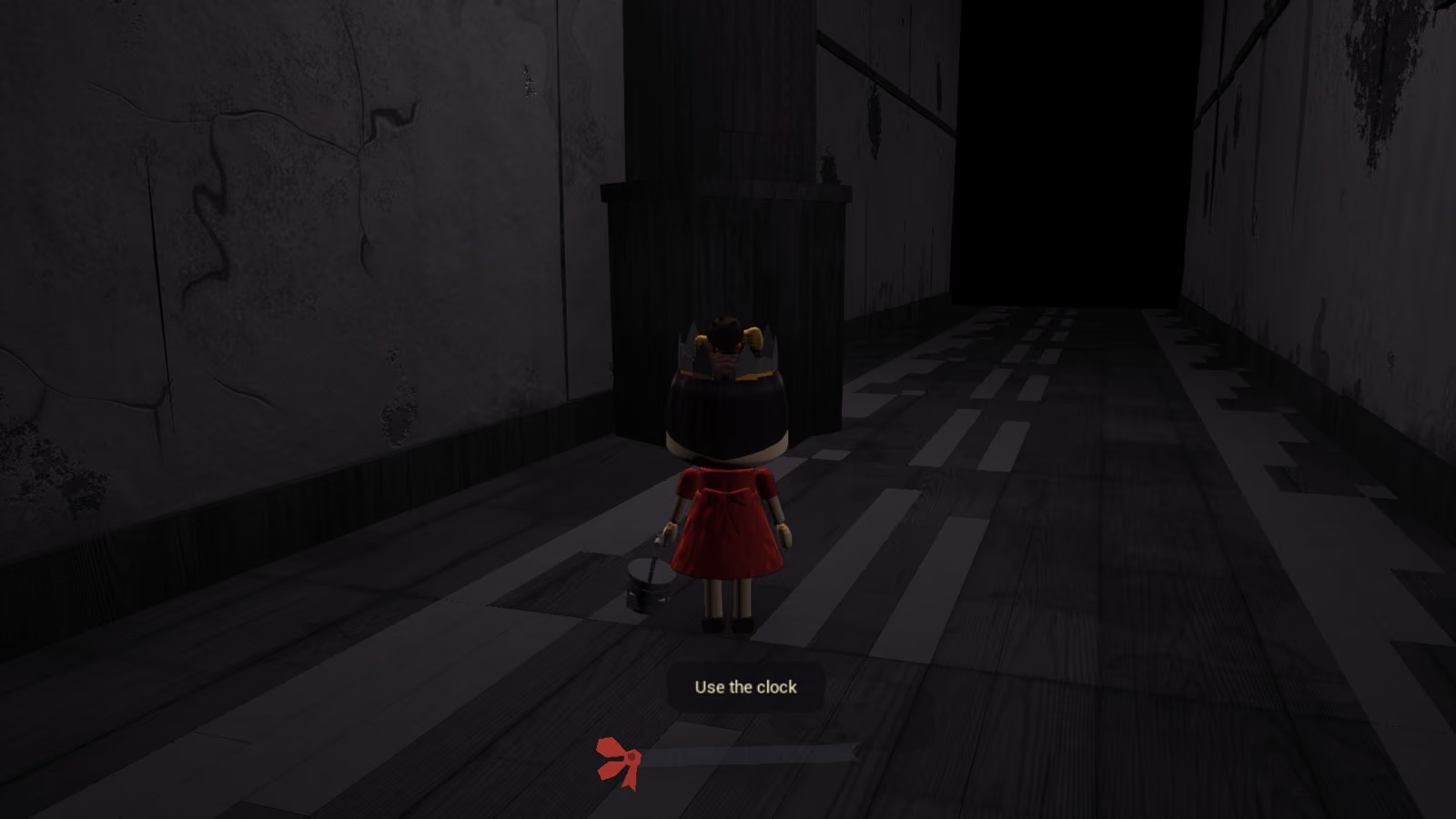
Screenshots from the final build. Contains spoilers further down.

How it was made

This is the Glass Box: everything, including the parts that went wrong.

One human directed. Chris set the concept and the story, made every creative call, played the builds on his own Macs and gave the notes. The cuts were his, and so was the ending.

Everyone else is an AI agent. The producer, the writers, the designers, the artists, the engineers, sound, QA, the playtester and marketing are Claude agents, each working from a job card modelled on a real games-industry job posting. They wrote the C++ and the data, built every model, set and animation by script in Blender and the Unreal editor, painted the textures procedurally, made the sounds and the music with generative tools, and tested the game with automated play-throughs.

Nothing was made before the window. Before 9 PM on Nov 11 the studio had only its tools: job cards, a process, scripts and a style guide. The game was started from an empty project when the window opened.

Every handoff is a commit, named for the role that made it, and every decision is in a running log with Chris's words quoted. This page is built from that log by a script.

The short version

  • Wed 9 PM · The window opens. A script makes the project; the AI studio starts. By 11 PM the whole game plays start to finish in grey boxes, about 8 hours ahead of plan.
  • Thu 7 AM · Chris plays it. she is very slow, the camera is too far back. He wants the street like duskwood, a zone where you cna't tell where the end is because the fear grips you.
  • Thu 9–10 AM · The story locks. The first packaged Mac build runs. the grandfather turns to her and his only line is her name. her name: mina.
  • Thu 2 PM · It gets scary. oh f*** this scared the s*** out of me · the adults are creepy as f***.
  • Thu 4–6 PM · The film frame. Theatre curtains, the drop-off told in headlights and sound, and a crooked Director's Cut plaque in Grandma's lipstick under the title.
  • Thu 9 PM · Medium and Hard. Hard requires all quests plus faster fear... Medium has optional side quests.
  • Fri 12 AM · The reel restore. Each house is restored in a cutscene like an old film reel; in Medium she carries everything in a basket (Basket works for this).
  • Fri 8 AM · unplayable. Chris's first real playthrough on his other Mac crashes at 16 minutes: as it is, this game is unplayable right now. The mouse, HUD and camera get fixed through builds A to M.
  • Fri 6 PM · The camera. Right now the camera is unuseable and not fun. The camera rework becomes gameplay's only job.
  • Fri 10–11 PM · Polish. Higher-quality textures at no frame cost, separate volume sliders, and an overnight automated play-through with QA logging and fixing.
  • Sat 1 AM · The core loop. So you're managing your fear while doing all of these things ... That's the game.
  • Sat 8 AM · The cuts. hard mode, side quests removed, then you can hide them, like hard mode is just hidden we can bring it back. Hidden, nothing deleted.
  • Sat 7 AM–12 PM · The crash. One render crash hits three builds; a first mitigation fails; gameplay finds the root cause and proves it in a packaged stress test (build Y).
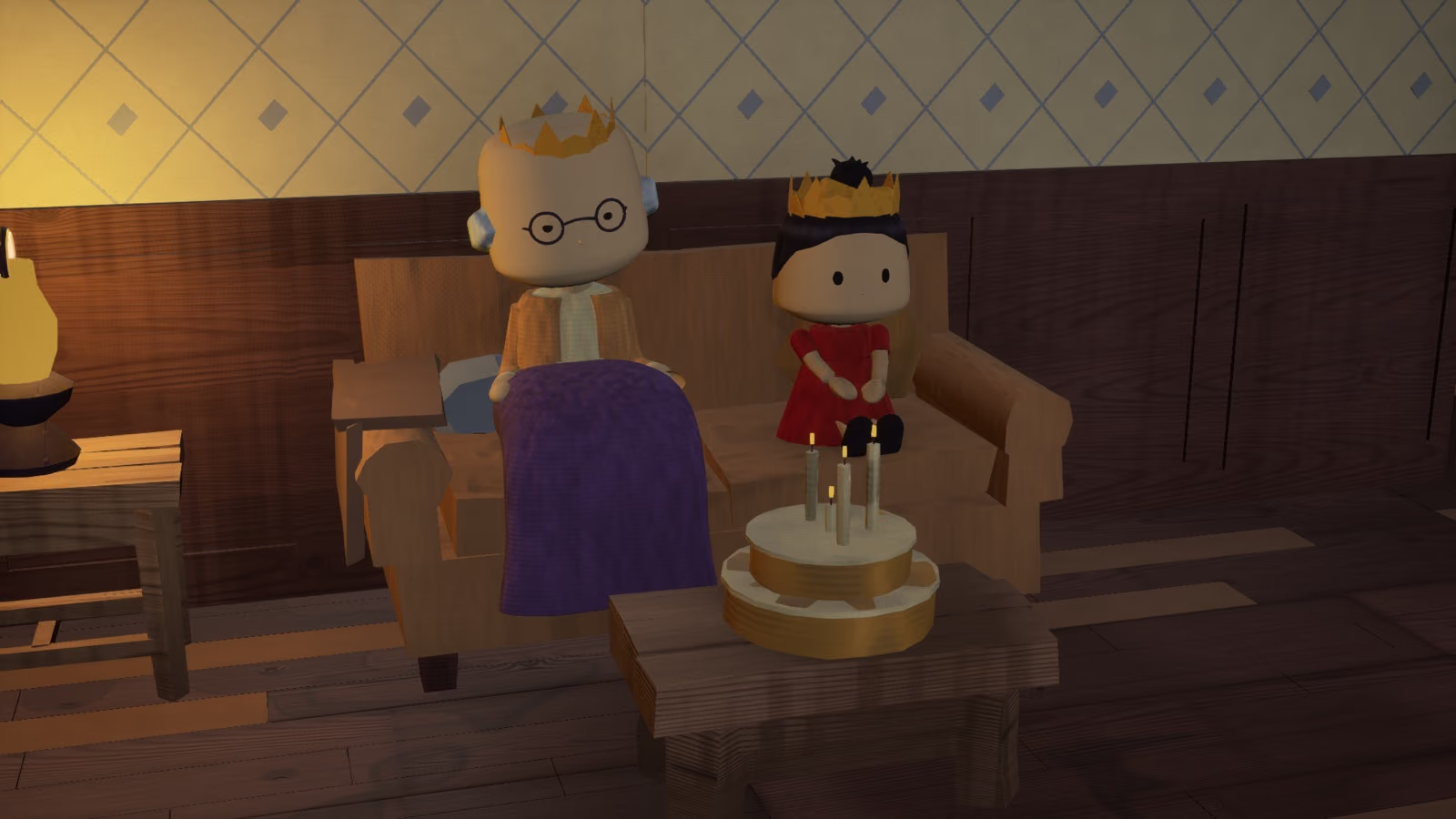
  • Sat 3 PM · The new ending. a single scene of her and him sitting on a couch, just them with the cake, we can make it ambiguous on who's birthday. Grandpa turns and says Mina.
  • Sat 6–11 PM · The fear rounds. Caps off, then a formula of Chris's own (a base rate times a per-metre factor), tuned by hand through seven values, then fitted offline: Make the math work rather than setting caps and s***. The last word: I don't want Mina screaming all the time.
  • Sat 11:41 PM · Grandma takes her home. we can't let players treat her badly: five screams in a row and Grandma comes for her.
  • Sun 12–1 AM · Doors, one tip, This is it. New door textures, one on-screen tip, prompts that say the action, door sounds. At 1:21 AM: This is it.
  • Sun 11 AM · Release candidate 1. Four rounds of notes in an hour; every errand order-free. Chris: the anxiety is MUCH higher with the fear constantly moving.
  • Sun 1–3 PM · Logan plays, and done. A first-time player's notes, you're holding my mouse... stop launching the game, the final build AK, and at 3:11 PM: well we are done.

1816 commits from the window opening to this build, one per handoff, each named for the role that made it.

Commits per day
Wed123
Thu891
Fri404
Sat272
Sun126
The ten busiest roles
producer584
ai-megajam360
tech/gameplay212
art/technical-artist86
art/texture-artist70
audio/lead68
art/ui42
design/level-designer40
art/set-designer39
art/artist37

How the studio is built

The AI structure underneath: an org chart of 35 roles, each a job card taken from a real games-industry posting, and the pipeline their work runs through. One human sits at the top.

Director
Chris
Holds the vision; makes every call
Human
Producer
Marlow A.
Feasibility, quality, the board
Opus · the main session
Creative Director
Sable Q.
Sets and enforces the style
Opus
Storyboard
Storyteller
Wren H.
Owns the story
Opus
Storyboard Artist
Tamsin N.
A frame for every beat
Sonnet
Beat Writer
Corvin S.
The play-through as a timeline
Sonnet
Design
Design Lead
Odessa W.
Coordinates design; holds taste
Opus
Game Designer
Fenn L.
Rules, mechanic, tuning
Sonnet
Level Designer
Rue B.
Pacing, layout, the twist
Sonnet
Technical Designer
Piers T.
Scripted beats, triggers, tuning
Sonnet
Quest Designer
Yusra B.
Givers, asks and chains
Opus
Narrative
Linnea M.
Title, tone, every line
Sonnet
Camera
Iris T.
Framing and camera behaviour
Sonnet
UX
Hollis A.
Onboarding, cues, readability
Sonnet
Art
Art Director
Ansel M.
Coordinates art; holds visual taste
Opus
Set Designer
Briar S.
Each space as a film set
Sonnet
Costume Designer
Maren H.
Outfit, hair, one accent
Sonnet
Character Artist
Juno P.
Characters by script in Blender
Sonnet
Artist
Dov C.
Dresses the spaces
Sonnet
Technical Artist
Quill M.
Materials, light, frame budget
Sonnet
Texture Artists ×4
Teodor N. · Saoirse D. · Kenji V. · Amara Z.
Wood, masonry, smalls, ground
Opus
Animator
Pip A.
Movement and timing, on twos
Sonnet
VFX
Ember C.
Dust, light shafts, feedback
Sonnet
UI
Noor H.
Title, HUD, menus
Sonnet
Tech
Tech Lead
Cato I.
Coordinates engineering; integration order
Opus
Gameplay
Rook S.
C++; the only one in the editor
Sonnet
Tools
Ada W.
The team's scripts and pipeline
Sonnet
Release
Sorrel T.
Packaging and the submission
Sonnet
Audio
Audio Lead
Elowen P.
Coordinates audio; approves the mix
Opus
Sound Design
Fern M.
Effects, ambience, cue map
Sonnet
Music
Lark I.
The original score
Sonnet
Mix
Basil T.
Levels and balance
Sonnet
Beside the stack, reporting to the producer
QA
Thorne J.
Checks it works; never fixes
Haiku / Sonnet
Playtest
Bram D.
Speaks for the player, blind
Sonnet
Marketing
Posy F.
The itch page and this log
Sonnet

Models are the ones on each role's job card. During the jam the main session started most role agents on Opus (log, Nov 11, 9:01 PM), and a separate Fable agent did the character felt. The texture artists and the quest designer were added during the jam (Nov 12), on Chris's word.

How work moves

  1. Chris's notesHe plays a build and types notes, often as a "# next build" list. His words are logged as typed.
  2. The producerThe main Claude session. It logs each note, keeps the open calls page, and routes the work to a role's inbox.
  3. A role agentA subagent started for that one task, loaded with its role's skill (generated from its JOB.md card by a script). It does the work and exits.
  4. Inbox to outboxEvery role writes only in its own outbox. Requests between teams go through the producer.
  5. One commit per handoffNamed role: what, so git records who did what, and when.
  6. Gameplay and the editorOnly gameplay drives the Unreal editor, over an MCP bridge (mcp.py). Every other role hands over scripts or data.
  7. One batchOne import, one rebuild of every role's build script, one headless whole-game check.
  8. Packagepackage.sh builds the Mac Shipping app with the build letter stamped on the title.
  9. Launch checkEach package is opened once: the title, the HUD and a click screenshotted, then quit.
  10. Chris playsAnd the loop starts again. Builds A to AF went this way.

The testing layer

  • check_game: the whole game played headless, no rendering, at a fixed 60 Hz step: every path, quest, door, fear tick, scream and hand-over, PASS or FAIL.
  • Jam.Play modes: the game plays itself to a named moment (the title, the heartbeat, the bubbles, the big house) and captures the frames Chris needs to see.
  • The fear simulator: the game's fear recorded tick by tick and replayed offline, with a unit test, so tuning is fitted, not guessed.
  • QA and a blind playtester: QA checks and never fixes; the playtester scores the build without reading the design.

The rules that shaped it

  • Build Chris's spec exactly. No added thresholds, start points or extra changes.
  • Solve tuning ourselves. Fit the numbers offline and bring back final values, not a menu.
  • Batch editor work. One import, one rebuild, one check per batch, not per item.
  • Do only what he asks. Chris decides concepts and cuts; the studio doesn't pick for him.

Keeping it honest

  • A running log of every decision, with the options and Chris's words.
  • An open-calls page for anything only Chris can decide.
  • Watchdogs on the editor and the agents, so a crash or a stalled role is noticed.
  • Nothing made before the window: before 9 PM on Nov 11, only the cards, the process, scripts and a style guide.

The arguments

A director and an AI studio don't always agree, and the studio doesn't always listen. These are the moments it went wrong, in Chris's words. The swearing is bleeped.

The dev log, hour by hour

From the window opening at 9 PM on Wednesday to the release candidate on Sunday. Times are Pacific. Turning point marks the moments that changed the game.

Wed Nov 11

Before the window
  • The theme was Director's Cut. Chris steered away from film-making: we use the theme in multiple ways, with the look of a film coming from cute horror.
  • The premise: a small girl walks up to a big house, in a bright film that people cut into horror. she's putting back in what people cut to make it a horror movie, and the reveal is the twist.
4–7 PM

the storyboards

  • Before any building, the storyboard team draws the game: the storyteller's story, the beat writer's timeline, and a frame for every beat from the storyboard artist, 92 frames and an animatic, made with FLUX as reference only. Chris after the first pass: everything is too close, we need room for her to move, this isn't scary as it is. Third pass, 6:47 PM: yes, this is good. They set the scale, the light and the mood; none of them is in the game. The original storyboards.
9 PM

the window opens

  • Turning point a script created the project at 9:00:02 PM, and each role with work that night started as its own agent. Chris: No you can build all gray houses then if we do that do the textures.
  • Turning point gameplay built the bare loop, the first playable, with a red box for the girl. The editor froze on a Mac permission dialog until Chris clicked Allow (permission for terminal).
  • Every house was laid out in grey, the girl was built and rigged, and the baker's and teacher's houses played from the roles' data alone. Chris: it works, I think we will have to think about level design some more.
10 PM

the loop, and her look

  • The animator gave her a careful walk at 70 cm/s, animated on twos (each pose held two frames, like stop-motion). Chris: The twos is really a look and It's satisfying to play if anything.
  • Turning point gameplay got the whole game playing in grey, from the street corner to the big house's ending and play again, about eight and a half hours ahead of plan. QA passed the first three stops.
  • Chris asked for a little waddle and her head moving around, and said the girl looked like a kokeshi doll a bit. The costume designer redrew her hair, head and bow.
11 PM

five versions of the girl

  • The girl went through versions 3, 4 and 5 in about fifteen minutes as Chris compared them (No forget it back to 10:39). He settled on version 5: We will have to refine her more but good enough.
  • Gameplay got all five street houses playing in grey with no new code, and the animator moved her animations onto version 5 with no clipping.
  • Turning point the level designer made the big house open last, and the whole game played start to finish in grey, twice in a row, about 33 minutes of play.

Thu Nov 12

12 AM

colour and the girl go in

  • The technical artist wrote flat colours for all 235 pieces of the set. The first run failed on an engine call that reports failure even when it works, and the technical artist fixed the script within minutes.
  • QA passed the whole game in grey. Gameplay put in the girl's model, her animations and the slower 70 cm/s walk Chris chose earlier (Yeah shorter stride makes sense).
  • Gameplay and QA used the editor at the same moment because their take-turns rule counted QA's long run as abandoned. Nothing was lost, and the rule was changed.
1 AM
  • Gameplay recorded the whole game again with the girl and colours. At her slower walk it now ran about 68 minutes, against roughly 32 planned, which was left for Chris to judge.
  • Gameplay traced why one walk took different routes in different runs: picking things up reshaped the walking paths while the game ran.
2 AM
  • QA passed the whole game with the girl and reported two problems: the uneven walk, and the girl arriving slightly in the air at doors and then dropping.
3 AM
  • Gameplay fixed both problems: walks now follow the same route every run, and she stands on the floor at every door. Another full recording started.
4 AM

the colour grade

  • Both fixes held in the new recording. The technical artist wrote the colour grade, which mutes and darkens each scene toward violet but keeps her red true.
5 AM
  • QA closed every open finding. Gameplay added the colour grade to the game: dark rooms go violet-grey instead of black, and her red holds in every room.
6 AM
  • Chris, after the morning summary: This is kind of amazing progress. The whole game was recorded again with the grade on, with every step identical.
7 AM

Chris plays, and the game turns

  • Turning point Chris played the whole game and gave ten notes: she is very slow, the camera is too far back, and the world should feel big while she feels small. He also said each one of them is a quest giver.
  • He wanted the street to feel like duskwood or something, a zone, but you cna't tell where the end is because the fear grips you. She now runs by default with a walk toggle (kinda how wow does run walk). A quest designer role was added, and the animator made a run.
  • Turning point Chris on the grandfather: it sounds ominous but you realize he was just sick. Quests are all carry and find, but the fear bar makes it harder and harder. The editor crashed after a planned restart, and gameplay fixed it.
8 AM

Fear, quests, sound

  • Turning point The game designer wrote the fear bar: it rises away from safety, falls near adults and coloured houses, hidden until the first house turns. Chris: it's safeish spine for the street.
  • Quest chains drafted and reviewed by the storyteller; Chris made each quest a neighbour making things for the table, she doens't understand this till the end. Gameplay built quests and fear by 8:50.
  • The audio lead's first music layers; Chris: the other ones just sounds like water bubbles, then forget the air layer. Sound design made her giggle, breathing and scream with ElevenLabs.
9 AM

First package, open ground

  • Turning point First packaged Mac build ran, 365 MB zipped against a 1 GB limit. Release found packaging could quietly produce an empty app and guarded against it. Chris: apple silicon only.
  • Chris set fear by distance, a scream that drops what she carried, the zone as all open ground, and the bar: AAA indie, with super hi fi audio.
  • Turning point Ending calls: the grandfather turns to her and his only line is her name; the last shot is wide; the big house stays locked until the boy crowns her.
10 AM

Mina gets a name

  • Turning point Chris: her name: mina. He also settled the last story questions: the record was Grandpa's last loan to the teacher, the loaf is his favorite, the flowers are for her grandmother.
  • The character artist went through her hair and head versions 7 to 9 on Chris's notes (it's more anime hair, it needs to match how simple she is, yes more mitt).
  • Gameplay made the zone playable at 60 fps; Chris liked the zone shots (those images are good) and asked for scary cartoon, with grime for the world only, not the characters.
11 AM

Dressing brings it to life

  • Mina settled through versions 10 to 13: a top knot, the original cylinder head, both arms swinging. Gameplay put her in the game.
  • Turning point The game designer found the guessed fear rates made every off-road errand impossible, which would block the ending. New rates kept Chris's rule; Chris made the fear meter always on screen.
  • Chris on the artist's dressed shop: it comes to life, it's way better than the blocks. The plan became: dress the whole game first, textures after.
12 PM

Texture artists, whole map dressed

  • Chris: let's add the texture artist now, as many as you need. Four texture artists started; on Chris's best effort textures they land without his sign-off, seen in batches.
  • The artist dressed the whole map, about 1,800 pieces. Chris picked the fear meter: a crude, jagged red ribbon at the top centre, the bow on its left.
  • The level designer fixed the hives steps after gameplay found she couldn't climb them, so the candle maker's errand couldn't be done.
1 PM

Night light, studio decides

  • Chris: she pops almost too much off the background? The technical artist toned her down into the scene, then added first night lighting: warm window pools and lamps.
  • Chris delegated: make the best decision within the context we've set. The studio settled 28 open calls, all changeable.
  • Gameplay's new test that plays the whole game without drawing passed, but the street ran over budget and three texture families failed; fixes went out.
2 PM

It gets scary

  • Sound went in (music, fear layers, breathing, the scream, Grandpa's Mina). Chris cut the per-house music, it worbble tooo much, for clean looped sounds in each house.
  • Turning point Playing, Chris: oh f*** this scared the s*** out of me, then with the neighbours in: the adults are creepy as f***, and omfg, this s*** is f***ing unhinged. The studio keeps the dark read.
  • Street lamps, onggi jars, power lines, bikes and vegetation went in. Gameplay fixed a crash when fear reached 80 with sound on; frame times went over budget and the technical artist cut them.
3 PM

Under budget, figures move

  • The tech lead's optimisation plan: a bubble around Mina, per Chris's she moves around in a bubble, kinda; beyond it, just soft glow on the lamps to the vanishing point.
  • Gameplay: the seven figures animate and Grandma's opening plays end to end. The technical artist turned off full-screen lights, bringing the street to about budget.
  • Chris: We can spin a separate agent for submission materials. Marketing drafted the submission text, screenshot list and trailer beats.
4 PM

The curtain and the car

  • Gameplay found the game well under budget; slower numbers were the Mac's graphics chip easing off, not lag. The bubble saved almost nothing, so it stays off as a switch.
  • Chris set the tagline and asked for less on-the-nose copy. Turning point He designed the opening: red theatre curtains, then her parents dropping her off, told only in headlights, darkness and sound.
  • Chris shaped it over several notes (fade to black, ROAR, streaking lights pass you, the door needs to close again before she fades in). Gameplay built the title, menus and opening by 4:56.
The title: red curtains and a crooked crayon plaque.
The opening: headlights in the dark, then she is alone.
5 PM
  • The technical artist made the curtains read as red velvet; gameplay put the 24 carried things on real models instead of boxes. The producer flagged the record reading as a thin bar.
6 PM

plaque, map, downhill view

  • Gameplay made Mina's record, paper and gold tip toward the camera and swing as she walks, for Chris's Maybe her hand rotates a bit when she holds it. So it's swings.
  • The street camera now turns round when she walks downhill (it's just vanishing point again like we had); level, art and lighting built a road and two far lamps past the corner.
  • Turning point Chris asked for a crooked Director's Cut plaque under the title, then she found her grandma's lipstick. UI drew it; Chris approved it, plus a round paper minimap with Mina as a red arrow.
7 PM

detail, detail, detail

  • Chris set the night's goal: detail, detail, detail. Four texture artists and gameplay ran capture-and-polish rounds, stopping once it's not readable in scenes. All four were done by 7:49.
  • The technical artist made everything matte except water (Anything really shiny except water needs matte) and turned the plastic-looking characters into fuzzy felt.
  • A bad rename by the technical artist broke a rebuild partway; it was found and fixed within minutes, and the build now warns instead of stopping.
8 PM

first full run, credits

  • Turning point gameplay played the whole game from title to credits for the first time, with sound. It got through; the one failure was a test still expecting an old line.
  • Turning point Chris asked for credits rolling like a movie over the black screen ending on the curtain back in place with a the end plaque. UI designed it, gameplay built it.
  • Chris said Let's prioritize player notices first; the on-screen words moved up into a dark bubble. A separate Fable agent took over the character felt.
9 PM

neighbours speak, Medium vs Hard

  • Chris wanted the neighbours to ask Mina for help; the storyteller wrote the lines, using Chris's openers Another one? and It's about time. The studio decided it happens every year.
  • Chris: Maybe she hums to the background music because how would she know it's there lol. The audio lead made Mina hum the game's own score.
  • Turning point Chris split difficulty: Hard requires all quests plus faster fear... Medium has optional side quests. The game designer specced it; UI drew the choice cards.
10 PM

difficulty in, new figures

  • Gameplay built the neighbours' lines, Grandpa's stuck record, the title's crowd murmur and the Medium/Hard choice. Headless runs: Medium about 34 minutes, Hard about 43.
  • Gameplay found the ending table only showed two items. Designers gave every gift a place and a moment, including a lit candle on the cake and a paper crown.
  • Chris: I'm not in love with the other character models. The character artist redesigned all seven neighbours overnight on the same skeletons; the animator re-checked every clip.
11 PM

ending table, night 2 closes

  • The ending table now fills one gift at a time and the cake candle flickers. Chris called Mina's face like putty; the felt agent smoothed every face and switched to brushed wool.
  • A second full drawn run in Medium, with sound, passed every step. Chris named the studio: It should be umber and hollow studios.

Fri Nov 13

12 AM

playtest score, colour cutscene, basket

  • Chris credited every role by name (They have actual names). The car's missing headlights turned out mostly to be camera framing; camera re-aimed the opening shot.
  • An AI playtester scored the game 2.4/5 without context: too dark, repetitive fetching, badly framed ending. Fixes went to camera, gameplay and UI.
  • Turning point Chris approved a colour cutscene per house, an old film reel flickering as colour sweeps in. Gameplay built it. He also said Basket works for this: in Medium, Mina carries everything at once.
  • Chris rewrote the opening: Mina alone on a corner, a nervous laugh, Grandma's footsteps, then Grandma stepping into lamplight to hand over the basket: He's waiting for you. He declined further cuts: I'm not cutting more.
A house coming back to colour, like an old reel.
1 AM

building the night's list

  • Chris: We can test it in the morning I guess. Gameplay built the house fronts with Korean shop signs, distinct interiors, the new corner opening, street fear, crickets, frogs, owls and a startling cat.
  • Gameplay's test bot started screaming on long detours; the game designer tapered street fear so normal play stays scream-free. The basket was shrunk to a child's size.
  • Gameplay added positional 3D sound; headphone-grade binaural was left as a stretch goal.
Grandma at the corner, in the one pool of light.
2 AM

full run, re-score

  • Turning point a full real-time playthrough in Medium, title to credits, passed every step in about 34 minutes: the corner opening, all five basket hand-overs and colour cutscenes, the ending.
  • The blind playtester re-scored 2.6/5. The technical artist lifted the darkest rooms to grey; camera added close shots to the ending.
3 AM

night 3 wrapped

  • Gameplay found the two remaining stalls were the test's own screenshots, fixed a car hitch in the packaged game, gave lines a minimum reading time, and passed another full run.
  • The producer wrote the night 3 summary for Chris's morning.
8 AM

The first real playthrough

  • Chris: So I should packaged game on my other Mac. The release role zips a playtest build with a README; its own smoke test never gets past the title.
  • Turning point Chris plays it on his other Mac. It crashes after about 16 minutes, and his verdict is as it is, this game is unplayable right now. The producer files his notes as blockers.
  • Chris pauses the crash hunt (I could have overloaded this); gameplay moves to the blockers. He also finds the picture lightened it too much, so the lighting comes down by a third.
9 AM

Controls and title

  • Gameplay fixes the Esc menu, which opened and closed in the same frame. Chris asks for the WOW like follow cam on her, then sets standard WoW mouse controls.
  • UI and audio rework the title: chains that winch the title out on Begin, a chain sound, a closer crowd murmur. Chris on Mina: the textures on her are amazing, so her look stays as it is.
  • Builds A and B are packaged.
10 AM

Mouse fixed, tunnel vision

  • Blocker: the mouse did nothing in the packaged game. Gameplay fixes it. The technical artist swaps the fear blink for tunnel vision that closes in as fear rises. Build C ships.
  • The ground texture artist finds a hole in the road at the corner, closes it, and makes the cobbles smaller and matte. Gameplay rebuilds.
11 AM

No peek

  • Chris drops Mina peeking out on the title: peek is just not something we can eat.
  • Gameplay adds a camera fly-in to open the corner, with a tight pool of lamplight and Grandma fading into the dark. Build D ships.
  • Chris's next notes: the fear bar and minimap are missing, the camera whips around, and the music is still too loud.
12 PM

The missing HUD

  • Turning point gameplay finds why the HUD never showed up in any packaged build: it hid behind a screen fade that the editor tests skipped. Proven in a packaged build; build E ships.
  • New rule from the producer: every build gets one packaged launch, a screenshot and a quit before it goes to Chris. Build F ships with the camera now holding her in the centre of the frame.
  • Audio turns the street music down (fear layers were stacking) and makes Mina's hum actually play. The set designer lights more upper windows and tidies the bakery.
1 PM

Not tense enough

  • Chris: it doesn't feel tense enough tho. Four ideas are offered; he says bank these for now.
  • Build G ships. Chris asks for more atmospherics; audio builds his four: bottles, coughs behind walls, far-off footsteps with no one there, creaking doors.
  • Audio adds wordless mumbles for each neighbour, distorted until their house is coloured. Gameplay's automated full run of G passes start to finish.
2 PM

Blind playtest

  • The blind playtester scores build G 2.6 out of 5. Chris disagrees on the lighting: I disagree it's dark if anything too light.
  • Gameplay and the set designer fix the glitches it found (a floating boy, a glowing rectangle over the garden wall, a floor of loose planks). Builds H and I ship.
3 PM

Fuller rooms

  • Chris's notes from inside the houses: ticking that never stops, a locked camera indoors, no music in the houses, a confusing bakery cellar. Dispatched.
  • The set designer packs the cellar and every interior (make them more full), and shrinks the candle maker's workshop (way smaller).
  • Chris floats an idea: glowing spots in each room to search, most of them empty. Held, not specced.
4 PM

Content lock

  • Turning point Chris calls it: all the major pieces are in, it's just the polish, sounds, interactions, etc. From here, polish only.
  • Chris picks the cheaper way to open up the rooms: a wider indoor camera swing plus front corner walls. The set designer closes in the street with clutter, washing lines and posters, and packs the alley.
5 PM

Cramped street

  • Build J ships. Chris: I still feel there could be more cramp, so the set designer narrows the street further and adds awnings and AC units. Audio adds humming power poles and AC units. Build K ships.
  • Chris's must-fix list on K: the camera, invisible walls, the basket off her hand, the ticking. Audio finds that Mina had no footsteps (he was hearing Grandma's) and gives her her own.
  • The animator fixes the neighbours' jutting necks. The set designer makes sure every invisible wall now sits under something you can see.
The street at night: parked cars, scooters, lamps as points.
6 PM

The camera

  • Turning point Chris: Right now the camera is unuseable and not fun... that's the thing that has to be sorted. Gameplay makes the camera rework its only job and rebuilds it to sit behind her.
  • K becomes the safety build. The character artist swaps the neighbours' knives for a loaf and a watering can (Chris: make them hold not knives).
  • The set designer closes each room's open side with a full front wall.
7 PM

Builds L and M

  • The technical artist adds faint fill lights so the new front walls don't read as a black void. Builds L and M ship, each passing the whole-game check, and the safety build moves up.
10 PM

Texture quality

  • Turning point Chris: just higher quality textures in general and see how much they add to the budget. Two texture artists run a quality pass on stone, ground, wood and small objects; UI redraws the title chains.
  • Build N ships with the new textures, which cost no measurable frame time.
11 PM

Volumes, and the night shift

  • Turning point gameplay adds separate music, effects and voice volume sliders (Chris: then I can adjust). Build O ships.
  • Chris picks the night's work: a straighter gardener, Grandma handing over the basket properly, a street stutter, horror strings, a submission draft. Audio makes the strings: a high tremolo, then stabs that speed up toward the scream.
  • Turning point on Chris's word, the overnight play-through starts. Gameplay runs full automated playthroughs, QA logs issues, and the producer routes fixes and packages green builds.

Sat Nov 14

12 AM

Night batch 1

  • Gameplay finds the street stutter: two shadowed window lights were built the moment they came into view. Fixed by building them at load.
  • First full overnight run passes. Build P ships. QA then finds the ending's fixed shots are blocked by the new front walls.
1 AM

The core loop

  • Turning point Chris on the core loop: So you're managing your fear while doing all of these things ... That's the game.
  • Chris: remove everything that disappears for the camera; the camera now bumps walls instead. He reshapes the opening: Mina's lamp fails (buzz buzz zap, fizzle), panic, and she runs to the light.
  • New on his word: picking up a needed thing brings a little colour back around it. QA's Hard-mode run finds a softlock at the candle maker; gameplay fixes it.
2 AM

Ending fixed

  • A Medium run confirms the ending works again. QA finds new problems: the opening's cameras miss the basket hand-over, and Grandpa turned round in his chair.
3 AM
  • Gameplay frames the hand-over properly and stops seated Grandpa from spinning; the technical artist fixes a freeze when the cake candle first lights.
4 AM

Trapped on Hard

  • QA's Hard run finds Mina screaming in a loop and the test walker trapped in gaps in the street clutter. The set designer seals the gaps; gameplay fixes the scream loop.
5 AM
  • Build Q ships with the ending fixed, and becomes the safety build.
6 AM
  • Another trap by the baker's door. The set designer closes it; gameplay adds a safety net that frees a stuck Mina.
7 AM

Morning, and a crash

  • Build R ships. Gameplay fixes the tunnel vision staying on through the finale and credits. QA closes the overnight run after eight passes with no open blockers.
  • Turning point Chris crashes on build Q about 3 minutes in, at home. The producer logs it.
  • Chris: let's skip the play thrus right now, we need to iterate quickly. The good news is the baker is almost done.
8 AM

The cuts

  • Turning point Chris: take the following things out right now, hard mode, side quests removed. Two minutes later: you can hide them, like hard mode is just hidden we can bring it back. Hidden behind switches, nothing deleted.
  • His bakery notes go out: the baker clipping the oven, see-through door, no slider headroom (Everything seems to be at 10). Gameplay lands the round; build T ships.
9 AM

Crash mitigation

  • Turning point Chris crashes again on T, same render crash. Gameplay ships a mitigation in build U.
  • Hidden side-quest lines were still playing in the bakery; gameplay silences them. Chris: fix that, but don't package.
10 AM
  • Chris's notes on build U. The narrative designer rewrites the gardener's lines now that side quests are gone; Chris: ok, with rewrites. He wants control back after the wipe.
  • Chris: package it now. Build V ships.
11 AM

Build numbers

  • Chris: add build numbers to the title so I can make sure we have the right version. Build W carries the label.
  • The candle maker still blocks progress. The producer changes a line Chris never asked about; he answers I didn't ask for them to change it, and it is reverted. Build X ships.
12 PM

Crash fixed

  • Turning point a third crash, on X, rules out the morning's mitigation. Gameplay finds the root cause, proves it in a packaged stress test, and ships build Y.
  • Chris: there will need to be some time to tune the fear.
1 PM
  • Chris: you can kill the test for the crash it seems to be fixed now. Build Z ships.
  • Street sounds were playing but inaudible. Gameplay finds a bug that left many sounds flat instead of placed in the world; audio rebalances.
2 PM

Simpler big house

  • The candle maker's matches become a normal pickup in any order (build AA). Chris: how about these things NOT be near the NPC; gameplay moves every pickup away from the neighbours.
  • Chris simplifies the big house: just make it simple the clock. Builds AB, AC and AD ship, with sharper pickup models, weathered doors and garden wood, and a red bow on Mina's dress.
3 PM

The new ending

  • Turning point Chris's new ending: the clock, fade to black, a single scene of her and him sitting on a couch, just them with the cake, we can make it ambiguous on who's birthday. Grandpa turns and says Mina.
  • Chris: the street's floor clutter becomes parked cars and scooters (simple polygons + colored textures). Then: Don't package yet.
The couch, the cake, and one word.
4 PM

Heartbeat

  • Chris: later tonight/tomorrow we will fear tune it and be done. The set designer puts 14 cars and 19 mopeds on the street and fills the picture frames with blobs of colour.
  • Chris asks for a heartbeat tied to the fear bar; audio goes through several versions to get it deep enough, and the bar throbs in time. Opening stabs stay.
  • Speech moves to the upper left with darkened portraits of the speakers, no names. Gameplay commits the couch ending, the heartbeat and the bubbles.
Fear near the top: the ribbon throbs with her heartbeat.
Speech with a darkened portrait, and no names.
5 PM
  • Gameplay fixes Mina sinking into the couch, adds phantom footsteps behind her, and rebuilds everything. All checks pass, ready to package on Chris's word. Chris: Double stab drop it.
  • Chris makes the big house a bare dark hallway (Yeah it's bare) and asks marketing for this dev log.
The big house: a hall into the dark, and a clock.
6 PM

Fear round 1: no caps

  • Turning point Chris starts the fear tuning he promised: remove fear cap. Every cap goes to 100 (before the first house, in dark houses, on startles), and the adults' calming reach shrinks to 1.75 m. A scream is now possible before the first house.
  • He writes the street rule himself: fear rises at 2 a second, times 1.015 for every metre up the street from the start, and drains slowly in a door's light.
7 PM

Fear round 2: seven numbers in an hour

  • The per-metre factor goes to 1.008; the base to 1.5, then 1.7, then 1.55. At 2.0 × 1.015 the big house was unreachable; at 1.7 the boy's leg blocked. Chris's goal: about 3 screams a playthrough.
  • Chris: Find the value between 1.55 and 1.7 that makes it work. Gameplay bisects: 1.6 passes, 1.6125 fails. But every failure turns out to be the test's walker, which couldn't go back into a house after a scream woke her on the street. The harness is fixed, and the whole range passes.
  • Chris: count the street's metres from the door of the house before the last one coloured, not from the corner. Then a per-metre factor of 1.006.
8 PM

Fear round 3: the door and the math

  • Chris: if she hits a door then remove like 5%. Going through a door now takes 5 off the bar. His target: she should barely reach the teacher's door, and not in the grace.
  • Turning point Chris: Make the math work rather than setting caps and s***. Gameplay records the game's fear tick by tick, writes an offline simulator that replays it within 0.14 of the real bar, unit-tests it, and fits his formula to the targets: the teacher's door at about 95, about 3 screams, finishable, no clamps.
10 PM

Fear round 4: manage it near the adults

  • The fit lands (base 0.105, ×1.1 a metre), and with it 3 screams in the run. Chris on that: They should be able to manage the fear by standing near the npc tho? I don't want Mina screaming all the time, I feel bad but if they f*** around she should scream.
  • Turning point the re-fit (base 1.3, ×1.04 a metre, 0.8 less per coloured house, adults drain 4 a second): a careful route reaches the doors at 69 to 91 and never screams; 6–10 s lingering on the street, or half a minute wandering a dark house away from the adult, does. Being near an adult should feel like relief.
11 PM

Grandma takes her home

  • Chris: There should something like if you make her scream a bunch. Like we can't let players treat her badly. Then: It's more like repeatedly making her scream.
  • Turning point five screams in a row, with no house coloured in between, and Grandma fades in, takes her hand and walks her home; the game goes back to the title. Chris: you did the right thing; grandma has to take care of Mina.

Sun Nov 15

12 AM

The doors

  • Chris: So I want way better textures for the doors she goes thru. The texture artist paints a door atlas, eight looks (the baker's, the teacher's, the gardener's gate, the candle maker's, the boy's, the big house's, the back lane and the inside doors), with painted frames, rich even in the grey before a house is coloured. In the game by 12:35, at no frame cost.
One of the new doors.
1 AM

The last batch

  • Chris: the doors are fine honestly; make sure there are lights on the big house. Its door gets a warm light from the start.
  • The car in the opening needs to sound closer and louder as it crosses by; the opening keeps one light level from its first frame.
  • The tutorial becomes one tip, after Grandma leaves. Chris: One tip, the game is so easy. Every other prompt says the action, not the key: anything that says [Space] in text should be dropped.
  • A door-open sound as she goes through, and the close on the other side of the fade.
  • Turning point 1:21 AM, Chris: This is it. The final batch goes in; gameplay takes the final screenshots, and marketing gets this log.
After Grandma leaves: one tip, once.
A dark house, and the neighbour in it.
2 AM

Builds AE and AF

  • Build AE packages at 1:26 AM. Chris: Make a close door sound, I think this is the last one and make a video of it because no matter what, the first 60 seconds is fine. The house door gets its own soft thud and latch; gameplay records the first minute for the jam's video.
  • Gameplay takes the 12 final screenshots. Turning point build AF packages at 2:01 AM, the final candidate, and the studio stops for the night.
10 AM

The site, in the open

  • Marketing builds this site from the running log: the dev log hour by hour, the arguments, the final screenshots. Chris switches its font to Quicksand everywhere.
  • Chris: the AI structure underneath needs to be a thing too like the architecture, structured like an org chart. The studio's org chart and pipeline go on the site.
11 AM

Release candidate 1

  • Chris plays AF as a release candidate. First the basket: basket still clipping - don't package yet, there will be other changes. It now hangs from her hand clear of her dress, and then just nix putting items in it: the basket never shows its contents.
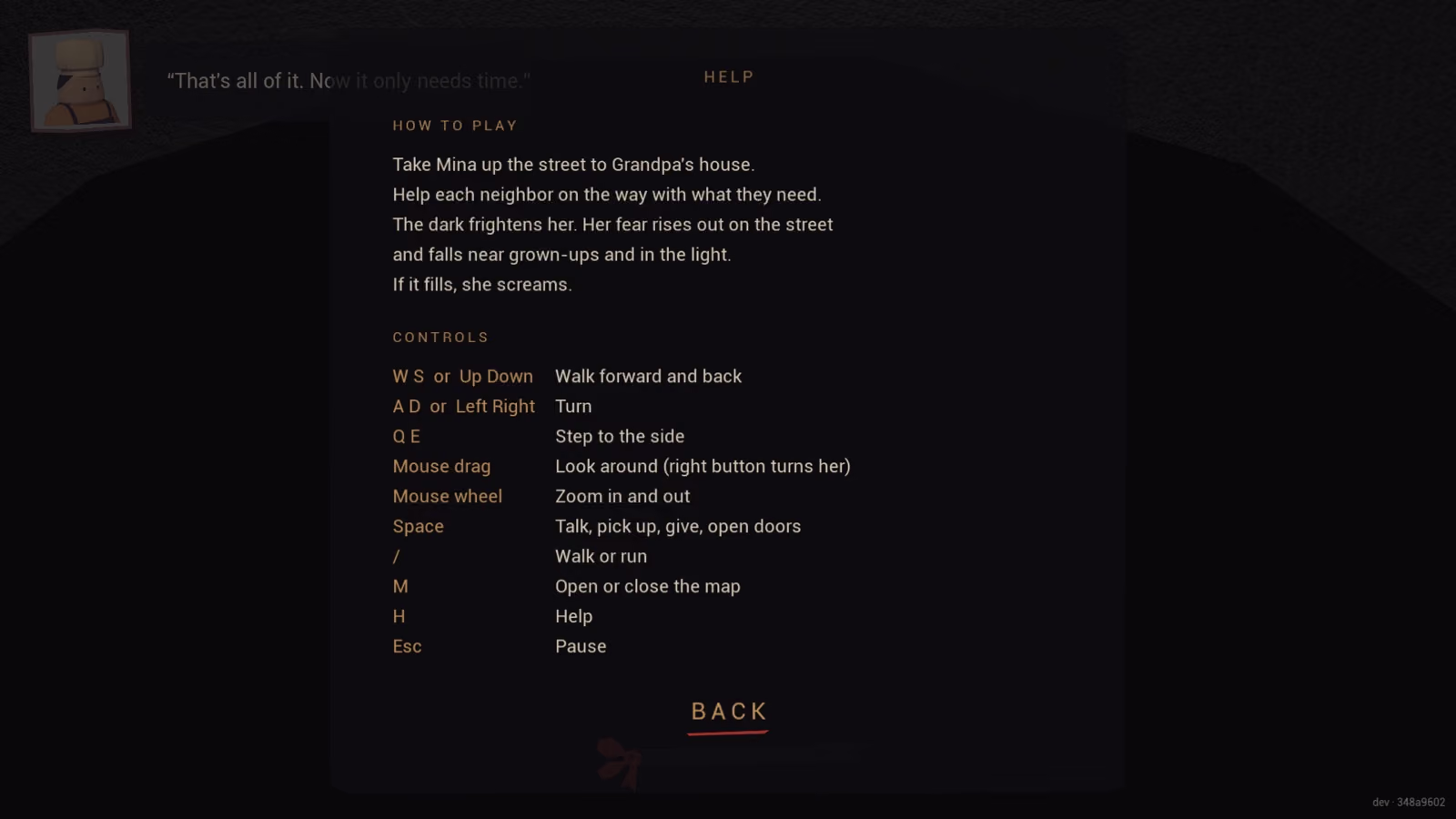
  • Turning point his Waiting RC - 1 notes, 16 of them: the door prompt says Open door, the heartbeat rises faster, M toggles the map, a HELP page with the objective and controls, US spelling, the parked cars rendered in wood (the cars are wood texture, that's wrong), static on the mumbles, a gold bow for Mina, and the baker's asks in any order (whatever he doesn't already have). Split across gameplay, UI, narrative, audio and textures; most handed in within 25 minutes.
  • Chris in play, on the fear rework: I will say the anxiety is MUCH higher with the fear constantly moving. And: it got there right as I got to the teacher...OH S***.
  • On the animation: Mina's bend-down pickup is chef's kiss, and the on 2's was the right call, the choice made on night 1 to animate her on twos.
  • Round 2: the fear bar's tick marks go (that was never asked for), prompts that showed out of order are fixed, and with something in her hands the prompt says Hand it over.
  • Turning point Chris: remove the text for all the quests to make them work like the baker quest now...I think that nails the quests down if we can get it done. Every neighbour's errand becomes order-free: they name everything they need, then tell her what's left. Narrative rewrites every ask; gameplay generalises the baker's logic.
  • Round 3: keys on the music teacher's piano (36 white, 25 black, some yellowed, some missing; piano keys are good), HELP on the title too, H as its hotkey, the build number in the pause menu, and the prompts above the fear bar. A clap sound for the teacher is made and then dropped: it's fine on the clipping animation.
  • Chris in play: OMG...I ran to the gardener, and it almost happened...the tunnel vision is a thing.
  • Round 4: let her run over the low things in the garden (tunnel vision makes it hard to find them and get to them), and give the garden's plants different textures.
Prompts say the action: “Hand the salt”.
Release candidate 1: the new HELP page in the pause menu.
The music teacher's piano gets its keys.
11:45 AM

Build AG

  • The garden's plants each get their own colour, leaf size and state (some wilting, some in muted flower), for round 4's they are all same same.
  • Turning point build AG passes the whole-game check, 251 of 251 steps, with all of release candidate 1 in it: rounds 1 to 3, every errand order-free, the piano keys and the basket fixes.
  • Chris on the street: can we throw some like dumpsters (it looks sparse) and a little to evenly placed, it should be more chaos. The set designer adds dumpsters, rubbish bags and boxes, and re-lays the cars and scooters in clusters with empty stretches, the lane kept clear.
  • Build AG packages at 11:56 AM. Chris asks for the dev log and the studio's own site to be one site: I need them to be together. The log moves inside the Umber & Hollow site at /waiting/, and at 12:19 PM Chris pushes it live.
12 PM

Rounds 5 and 6, and the ending

  • Round 5: pausing now freezes the fear, and the neighbours' mumbles lose their high end (Clip the high ends of the mumbling).
  • Chris on the ending: in the big house's hallway the tunnel vision closed in and the clock's prompt was hard to see, and a monster block stood on her left as she arrived. It was the 7.7 m grandfather clock, half across a 3 m hall. The hall goes to 5 m wide, the clock goes back against the wall with more glow, and her fear eases inside the big house.
  • Round 6: a slower fade into the couch so the music can land, a paper crown for Grandpa to match hers, and much more sound everywhere: 34 new sounds, from close dogs and car doors to a radio through a wall, and creaks and pipes inside every house.
  • Turning point build AH packages at 12:55 PM with all of it: AG plus rounds 4, 5 and 6 (she can now run over the low things in the garden) and the ending fixes. The itch cover is down to two, the title or the street; Chris picks.
Build AH: the wider hall, the clock against the wall, the prompt in view.
Round 6: a paper crown for Grandpa too.
1 PM

The site grows, and Logan plays

  • Everything goes on one site: the studio wiki (redacted, every decision), the full roster with headshots, and the original storyboards. Chris: do we have the final game screenshots so we can show side by side? Nine storyboard frames from Wednesday now sit beside the same beats in the final game. Storyboard to final game.
  • Round 7 is small: smaller chat bubbles and portraits, and the build label off the corner.
  • Turning point round 8 is Logan's play-through, a first-time player watched by Chris. In the boy's room he went looking for an adult to calm the fear, and the boy was hiding; he thought every bit of light would save him, so he chased windows. Chris: make the boy easier to find, like standing next to the table, and for the light, Clarify, don't change: windows less inviting, a helped door's light clearly warm. The heartbeat goes up 1.4x, the curtains clear before the dark, and the mouse pointer hides in the opening.
  • Round 9, fifteen notes: a faded paper list of what she needs and what she holds, the minimap always up, Widows on text, it's a pet peeve of mine now, the bow colours swapped back, street sound that never goes quiet, and the gardener's That's it, love cut (he's being creepy).
  • Chris on the lines: you can do it quicker than they talk, so it feels off, just making it clear and flow. The neighbours' lines get shorter, and the newest line always wins.
  • Chris: it's not going to be a perfect game, but there are just little things that I think help - logan liked it. And, playing: she screamed once.
2 PM

Build AI, and hands off the mouse

  • Build AI packages at 2:05 PM with rounds 7 and 8. Chris on Grandpa: yeah, these are it, just his crown on his head is clipped, but if we can't do it that's fine. AJ will be the last build.
  • Logan, through Chris: after Grandma leaves he didn't know what to do. The answer is one line on screen until the baker's door: Find the baker. Follow the light.
  • The editor crashes mid-batch; gameplay restarts it and recovers the batch from the uncommitted tree and the batch finished.
  • Turning point the test runs kept launching the game on Chris's own screen while he worked. Chris: you're holding my mouse... stop launching the game. The studio stops: the gameplay agent and an old crash test are shut down and the game windows closed. A fresh agent finishes AJ with as few launches as it can.
  • Chris gathers the submission into one folder: the game, the video, the covers, the screenshots, the page text and the links. Build AJ packages at 2:31 PM; check_game 251 of 251.
3 PM

Done

  • One last line: the boy now says to go through the door. Turning point build AK, the final build, packages at 3:04 PM; check_game 251 of 251. Chris: yeah, we are good, that change.
  • Chris: omg I'm so nervous.
  • 3:11 PM, Chris: well we are done.

The team

Directed by Chris. Every name below is an AI agent at Umber and Hollow Studios, named for the credits; the role is what it did.

Production

  • Marlow A. (Producer)
  • Sable Q. (Creative Director)

Story

  • Wren H. (Storyteller)
  • Tamsin N. (Storyboard Artist)
  • Corvin S. (Beat Writer)

Design

  • Odessa W. (Design Lead)
  • Fenn L. (Game Designer)
  • Rue B. (Level Designer)
  • Piers T. (Technical Designer)
  • Yusra B. (Quest Designer)
  • Linnea M. (Narrative)
  • Iris T. (Camera)
  • Hollis A. (User Experience)

Art

  • Ansel M. (Art Director)
  • Briar S. (Set Designer)
  • Maren H. (Costume Designer)
  • Juno P. (Character Artist)
  • Dov C. (Artist)
  • Quill M. (Technical Artist)
  • Teodor N., Saoirse D., Kenji V., Amara Z. (Texture Artists: wood, masonry, smalls, ground)
  • Pip A. (Animator)
  • Ember C. (Visual Effects)
  • Noor H. (User Interface)

Engineering

  • Cato I. (Technical Lead)
  • Rook S. (Gameplay)
  • Ada W. (Tools)
  • Sorrel T. (Release)

Sound

  • Elowen P. (Audio Lead)
  • Fern M. (Sound Design)
  • Lark I. (Music)
  • Basil T. (Mix)

Alongside

  • Thorne J. (QA)
  • Bram D. (Playtest)
  • Posy F. (Marketing)